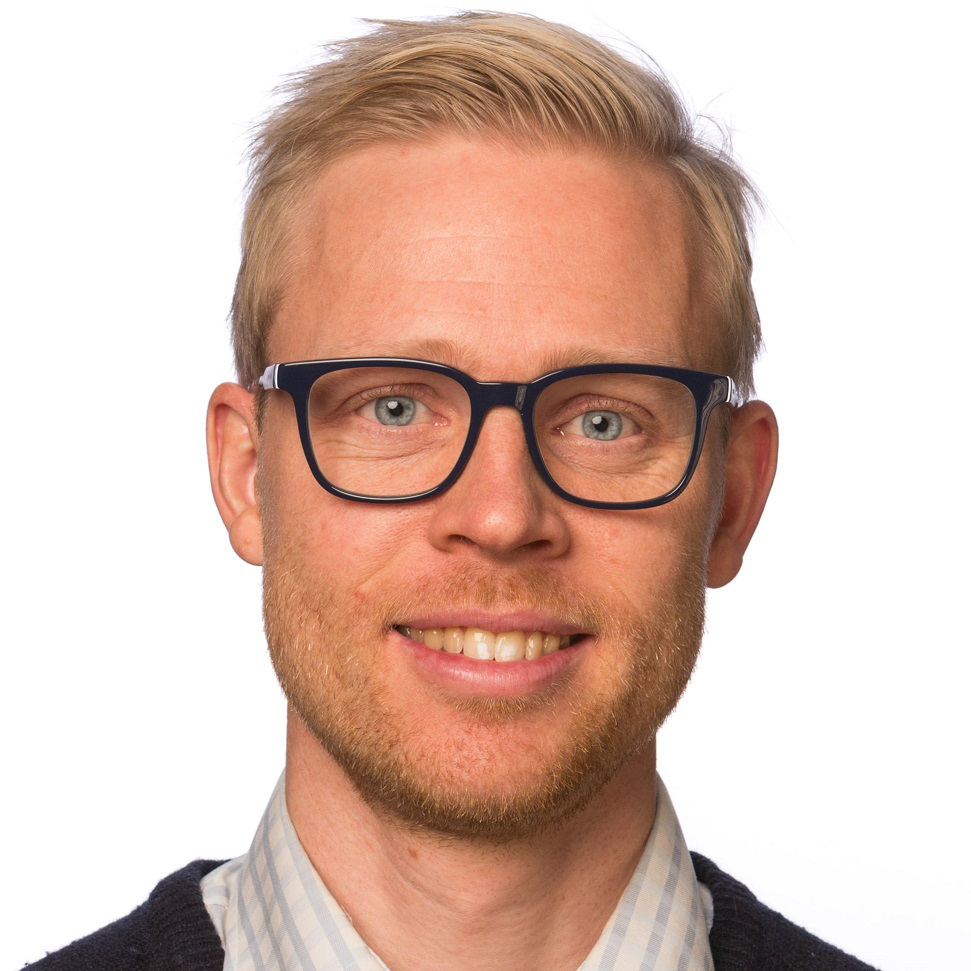
Radar campaign 10-12 June 2024
We carried out an extensive radar campaign in Västerbotten, with radar measurements from a drone, ground penetrating radar, and a tower. This was also reported by the regional press, VK article.
Thanks for stopping by!
I am a Physics Engineer and Associate Professor in Technology at the Swedish University of Agricultural Sciences (SLU), Umeå, Sweden. I work as a researcher at SLU, and I also work as a senior researcher for the Swedish research institute Skogforsk.
Use the menu above to find more about my research.
About me
I am interested in remote sensing and optimizing the use of various sensors to monitor the forest. The main goal of my research is to develop new and better methods for doing so. I mostly work with satellite images (radar and optical), airborne laser scanning, and field sample data. The mapping of forest is important for the understanding of the global carbon cycle, since the forest biomass represent a large part of the carbon stored globally. My work includes e.g., estimation of forest growth, changes, and the development of methods to rapidly identify areas affected by natural damages.
Core idea
The data obtained from remote sensing contain information (e.g., spectral or height) from an observed area, which can be used to estimate and predict properties of larger areas. The data primarily consist of raster images or laser point clouds, which are geographic data with coordinates. This enables extraction of values for selected locations which can be used to model some reference data (often field measures from the ground). Model-based and model-assisted inference are commonly used to predict wall-to-wall rasters of the variables of interest. Design-based inference and hybrid inference are other common methods for generating estimates of larger regions.
My work develops theories and explores for example what different sensors can be used for, how the data should be processed, and what happens in different conditions when either the acquisition configuration or the observed objects change. The work often relies on statistical methods to achieve this.
Contact
I am fortunate to be doing much of my work in collaboration with terrific colleagues and students. If you should have any comments about my research, suggestions for future studies, or invitations for talks or public speaking, please do not hesitate to contact me by e-mail henrik[dot]persson[at]slu[dot]se
ORCID: 0000-0002-3403-057X